
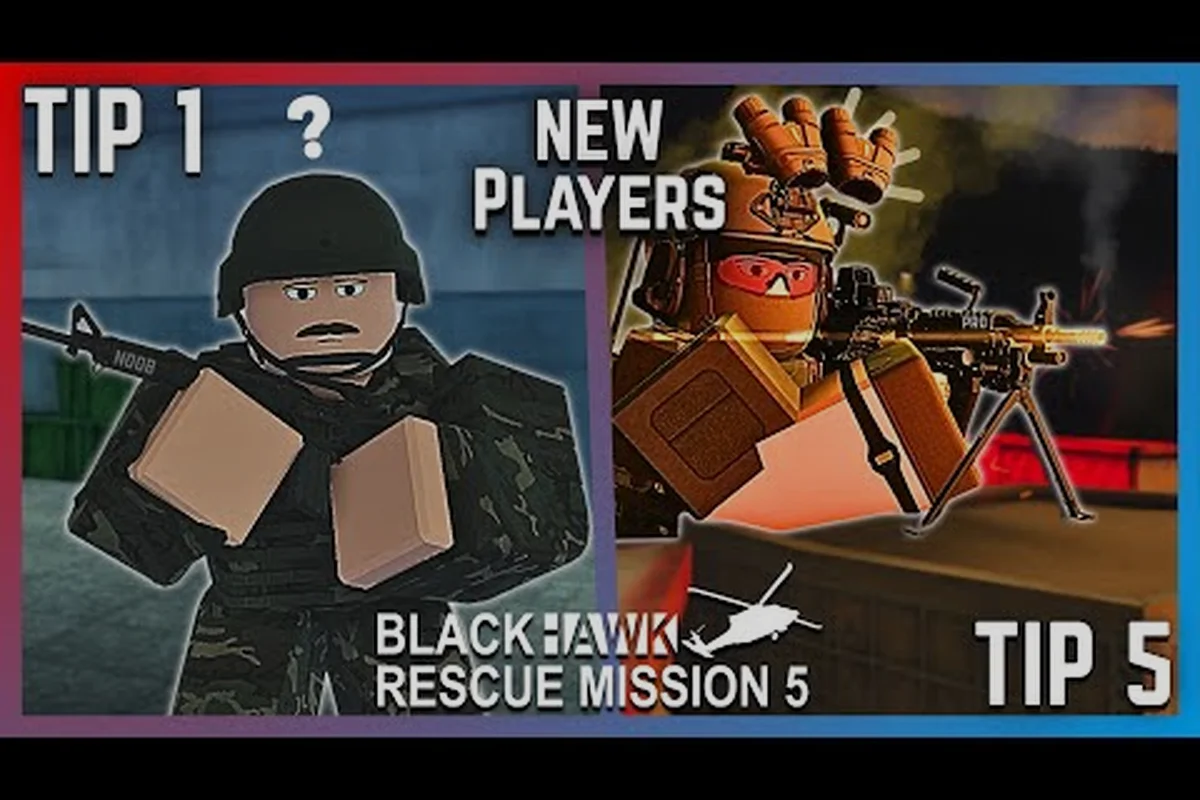
Competitive lobbies in Blackhawk Rescue Mission 5 reward players who combine sharp shooting fundamentals with disciplined economy management. Tournaments inside the game's organized pvp scene are the fastest way to turn raw aim into a steady payout stream, because the bracket structure converts consistent round wins into cash, gear, and stash upgrades that compound across future events. This guide walks through how the brm5 tournaments circuit actually works, which weapons the community ranks at the top of the 5.56 tier, how to read the bracket and seed properly, and how the market and stash systems interact with your tournament results. By the end, you will have a practical playbook for entering your first bracket, surviving the first two elimination rounds, and walking away with rewards that actually fund your next run. Market and stash systems interact with your tournament results, so pair every entry with a loadout you can actually defend under pressure — our Brm5 Best Pvp Gun picks for reliable eliminations show which weapons consistently carry you past the first two elimination rounds and into a payout that funds your next run.
For a closer look at this topic, the official video below breaks it down in full: the BRM5 beginner video on brm5-tournaments.
How the Brm5 Tournaments Circuit Works
The competitive scene inside Blackhawk Rescue Mission 5 is built around organized brackets that players enter through the pvp lobby interface. According to community reports, each bracket seeds entrants based on recent match performance and the rating they have built through the standard pvp queue, which means your placement in the opening round is largely a function of how cleanly you have been winning gunfights in the weeks leading up to registration. Players who treat casual pvp as warm-up rather than a side mode tend to draw softer first-round opponents, because the matchmaking system weighs recent form heavily when seeding the bracket.
Bracket structure typically follows a single-elimination format with a small losers' bracket for second-chance runs, and round length scales with player count. Smaller community-run events cap at eight teams, while the larger weekend brackets can swell past thirty-two entries. The reward pool is split across the top three placements, with the winner taking the largest cash chunk, a guaranteed rare weapon skin, and stash priority for the following week's reset. Second place earns enough currency to fully restock a loadout, and third place usually covers ammunition and medical consumables for the next two brackets.
A common misconception among newer competitors is that tournament rewards are mostly cosmetic. In practice, the cash payouts and stash tokens feed directly into the brm5 pvp market, where you can buy replacement parts, optic upgrades, and ammunition crates at a discount. Treating the market as a long-term investment rather than a one-time reward sink is what separates players who break even from those who actually profit across a full season of brm5 tournaments.
Seeding, Bracket Math, and Round Strategy
The first round of any brm5 tournaments bracket is statistically the most important, because losing early forces you into the losers' bracket where the path to a payout is twice as long. Community data suggests that roughly 60% of tournament winners come from the top half of the original seed, which is not because higher seeds are simply better, but because a favorable first matchup lets you conserve ammo and medical consumables for later rounds when opponents are noticeably stronger.
| Round | Typical Opponent Tier | Recommended Pacing | Risk Level |
|---|---|---|---|
| Round 1 | Low-to-mid seed | Aggressive, conserve nades | Low |
| Round 2 | Mid seed, warmed up | Controlled pressure | Medium |
| Semifinals | Top half of bracket | Peak aim, full utility | High |
| Final | Best of bracket | Map knowledge wins | Critical |
Reading the bracket before you register matters more than players realize. If your seed places you next to a known top-tier player in round one, the expected value of entering drops sharply, because the probability of advancing past a clear skill gap is below 20% for most non-pro competitors. Waiting a week to grind casual pvp, raise your rating, and re-enter with a better draw is almost always the higher-EV play.
Reward Distribution and Stash Integration
Tournament rewards split across three payout tiers, and each tier feeds into a different part of the brm5 pvp stash economy. Winners claim the cash prize, a rare cosmetic, and a stash token that unlocks one extra inventory row for the rest of the season. Second place gets cash and ammunition credit, while third place earns a partial stash token that completes after a second top-three finish.
| Placement | Cash Reward | Stash Token | Market Discount | Cosmetic |
|---|---|---|---|---|
| 1st | Full pool | 1 full token | 25% off for 7 days | Rare skin |
| 2nd | 50% pool | None | 15% off for 3 days | Uncommon skin |
| 3rd | 25% pool | 0.5 token | 10% off for 24 hours | Common skin |
The stash tokens are the real long-term prize, because the extra inventory row persists across all pvp modes, including the brm5 pvp zombies sub-mode where slots matter most. Players who consistently finish top three in brm5 tournaments accumulate stash tokens faster than they can spend them, which is why the competitive top of the leaderboard tends to run heavily customized loadouts that casual players cannot economically replicate.
Gunfight Fundamentals That Decide Brm5 Tournaments
Aim alone does not win brm5 tournaments, but aim without positioning loses them instantly. The community tier list for primary weapons consistently places the L85 at the top of the 5.56 rifle class, with the MK 18, AK74, M4A1, and FAL filling out the next four slots depending on play style. A community weapon ranking video breaks down the damage profile, recoil pattern, and effective range of each rifle, and it is worth studying if you plan to commit to a single primary for the full tournament season.
The L85 dominates because its low recoil and predictable sight picture let players focus on crosshair placement rather than compensation. The MK 18 trades some of that stability for a faster time-to-kill at close range, which makes it a strong pick for the tight corridors that dominate brm5 pvp maps. The AK74 sits in the middle with a steeper learning curve but higher damage per bullet, and the M4A1 is a versatile jack-of-all-trades that never feels outclassed. The FAL is the high-risk choice, with a slow cycle but the highest single-shot damage of the 5.56 class, rewarding players who can land accurate first bursts.
Holding Angles and Crosshair Discipline
The single biggest differentiator between casual and competitive players in brm5 combat guide practice is pre-aim discipline. Walking around a corner with your crosshair already on the head-height line where an enemy is likely to appear cuts your reaction time nearly in half, because you are not making a panic flick from hip-fire to headshot. Community data from tournament VOD reviews suggests that players who maintain strict crosshair placement win roughly 70% of their opening duels, regardless of raw mechanical aim.
Pre-aim angles vary by map, but the principle stays constant: identify the two or three positions an enemy is most likely to hold, and clear them in the order that gives you the fastest sight acquisition. The most common mistake is aiming at the floor while moving, which forces a vertical correction in every duel and burns the milliseconds that decide close-range gunfights. Drilling the habit of keeping the crosshair at head height during every traversal turn is unglamorous work, but it is the foundation every other gunfight tip builds on.
Recoil Control and Burst Discipline
Firing full-auto at medium range in a brm5 tournaments match is one of the fastest ways to lose a round, because the recoil pattern of most 5.56 rifles pulls the crosshair up and to the right after the third or fourth bullet. Community testing shows that controlled three-round bursts land roughly 40% more hits on target than sustained full-auto spray, because the recoil reset window between bursts lets the sight return to the head-height line before the next trigger pull.
| Weapon | Optimal Burst | TTK at 20m | Recoil Severity |
|---|---|---|---|
| L85 | 3 rounds | ~0.45s | Low |
| MK 18 | 3 rounds | ~0.40s | Low-Medium |
| AK74 | 2 rounds | ~0.42s | Medium |
| M4A1 | 3 rounds | ~0.48s | Low |
| FAL | 1-2 rounds | ~0.50s | High (per shot) |
The FAL rewards disciplined single-tap or two-round burst fire at range, because its high per-bullet damage compensates for the slower cycle, but it punishes spray-and-pray players harder than any other rifle in the tier list. Choosing your primary for a tournament should match your natural fire cadence, not just the community's top-ranked option.
Reading the Brm5 Pvp Market for Tournament Prep
The brm5 pvp market is the in-game economy hub where tournament cash payouts get converted into gear upgrades, and players who understand its rhythm enter every bracket with a meaningful equipment advantage. Prices on the market fluctuate based on supply from previous tournaments, so the day after a large weekend bracket is often the cheapest time to restock ammunition and consumables. Waiting until an hour before your next registration typically means paying a 20-30% premium, because every other competitor is doing the same scramble.
The market sells three categories of items that matter for tournament prep: weapons and weapon attachments, ammunition crates, and medical consumables. Weapon prices are relatively stable, but attachment prices swing wildly based on which rifle the community has ranked at the top that week. If the latest community tier list pushes the MK 18 into a higher slot, expect MK 18 optics and grips to spike by 15% within 24 hours, which is why serious competitors buy their attachment upgrades immediately after winning a bracket while the rest of the field is still celebrating.
Budget Allocation Across a Tournament Season
Spreading your tournament winnings across the right categories matters more than the raw size of your payout. The most efficient budget split, according to community-run economy analysis, puts roughly 40% toward ammunition, 30% toward medical consumables, 20% toward attachment upgrades, and 10% held in reserve for emergency restocks between rounds. Players who spend the entire payout on a single high-end weapon often find themselves unable to afford the ammunition and meds needed to actually use it across a full bracket.
| Category | Budget Share | Purpose | Resale Value |
|---|---|---|---|
| Ammunition | 40% | Sustained fire across rounds | Low |
| Medical | 30% | Surviving extended gunfights | None |
| Attachments | 20% | Improving weapon handling | Medium |
| Reserve | 10% | Emergency restocks | N/A |
The reserve fund is what separates a player who enters every weekend bracket from a player who only enters when the payout looks big. Having 10% of your winnings sitting in cash lets you grab a discounted ammunition crate the moment prices dip after a major tournament ends, which compounds into a real equipment edge by the third or fourth bracket of the season.
Managing the Brm5 Pvp Stash for Sustained Competition
The brm5 pvp stash is the long-term inventory system that holds everything you have earned or purchased across competitive play, and managing it well is what lets you keep entering brackets without running out of supplies mid-tournament. Each stash row holds a fixed number of slots, and tournament top-three finishes unlock additional rows that persist for the rest of the season. Players who finish in the top three consistently end the season with a stash that is two or three rows larger than the median competitor, which translates directly into carrying more consumables and spare attachments into each match.
Stash management is also about knowing what to sell and what to keep. Ammunition crates that you do not need for the next two brackets can be liquidated on the market at near-full value, while medical consumables and attachment upgrades should be hoarded because their resale price is significantly lower than their utility value. The most common mistake newer competitors make is selling off consumables after a single loss, which leaves them under-equipped for the next bracket and forces a cash purchase at inflated prices.
Stash Token Accumulation and Inventory Expansion
Stash tokens earned through top-three tournament finishes are the most valuable long-term currency in the competitive economy, because each token permanently expands your inventory. Community data suggests that the average competitive player finishes top three once every four brackets, which means accumulating a meaningful stash expansion takes a full season of consistent performance. Players who break into the top three more frequently treat their stash as a compounding asset, because the extra slots let them carry the consumables needed to win more matches, which in turn earns more stash tokens.
| Stash Tokens Earned | Inventory Rows Added | Approximate Tournaments |
|---|---|---|
| 1 | +1 row | 2-3 top-three finishes |
| 3 | +2 rows | 6-8 top-three finishes |
| 5 | +3 rows | 10-12 top-three finishes |
The relationship between stash size and tournament performance is bidirectional, which is why the competitive leaderboard tends to separate from the casual player base fairly quickly. Once you have the inventory capacity to carry full medical kits, spare attachments, and two ammunition types, the only remaining limit is your actual gunfight skill, and that is where the brm5 combat guide fundamentals start to matter.
Cross-Mode Synergy: Brm5 Pvp Zombies and Tournament Play
The brm5 pvp zombies sub-mode intersects with tournament play in ways that most players overlook, because the stash tokens earned in zombie extraction runs can be spent on pvp consumables and vice versa. According to community reports, players who split their time between the organized brm5 tournaments bracket and the zombie night extract loop tend to accumulate stash tokens roughly 30% faster than players who only play one mode, because the reward structures are staggered across different weekly cycles.
The brm5 zombie night mode is particularly valuable for tournament prep because it lets you practice close-quarters gunfights against AI-controlled hordes that mimic real player movement patterns. Drilling your aim in zombie extract runs between tournament days is a low-pressure way to keep your reflexes sharp without burning tournament-grade ammunition. The cash earned from successful zombie extracts also feeds back into the brm5 pvp market, where you can pick up discount consumables on off-days when tournament competitors are not driving up prices.
Players who ignore the cross-mode synergy often find themselves financially strained by mid-season, because the tournament payout schedule is front-loaded toward winners while the zombie mode offers smaller, more frequent cash injections. A balanced weekly routine that includes two or three zombie extract runs between brackets keeps your market wallet topped up and your stash inventory healthy without diverting focus from your primary competitive grind.
Building a Tournament Day Checklist
A solid tournament day checklist turns the difference between entering a bracket on autopilot and entering it with a real chance of reaching the top three. The first item on any checklist is weapon maintenance: inspect your primary and secondary for degraded parts, replace any optic or grip that has taken durability damage, and confirm that your ammunition count is at least 150% of the expected rounds per match. Skipping this step is how players lose opening-round gunfights to a misaligned sight or a jammed firing pin.
The second item is consumable stocking. Carry at least two full medical kits, three grenades if the map set favors them, and a backup ammunition crate that stays in your stash until the third round. The third item is mental prep: warm up with 15-20 minutes of casual pvp or zombie extract before the bracket starts, because cold hands lose close-range duels even when the underlying aim is solid. The final item is bracket review: pull up the seeded bracket 10 minutes before registration closes and confirm your first-round matchup is one you have a realistic chance of winning. If the draw is brutal, consider sitting this one out and grinding rating for a week to earn a softer seed.
| Checklist Item | Time Required | Cost | Impact |
|---|---|---|---|
| Weapon maintenance | 10 min | Low | High |
| Consumable stocking | 15 min | Medium | High |
| Mental warm-up | 20 min | Free | Medium |
| Bracket review | 10 min | Free | High |
Players who follow this checklist consistently report top-three finishes at roughly twice the rate of players who just queue up cold. The total time investment is under an hour, which is a small price to pay for a meaningful edge in a competitive field where most entrants skip the basics.
Frequently Asked Questions
How do brm5 tournaments seeding and brackets actually work?
Tournaments seed entrants based on recent pvp rating and match history, with higher seeds typically placed in separate bracket halves so they do not meet until later rounds. Smaller brackets are single-elimination with a short losers' bracket for second chances, while larger weekend events can run past thirty-two entries with a top-three payout structure.
What is the best primary weapon for brm5 tournaments?
The community tier list consistently ranks the L85 at the top of the 5.56 rifle class due to its low recoil and predictable sight picture, but the MK 18, AK74, M4A1, and FAL are all viable depending on your preferred fire cadence. Pick the rifle that matches your natural burst discipline rather than chasing the community's top-ranked option.
How does the brm5 pvp market reward tournament winners?
Tournament cash payouts feed directly into the in-game market, where winners can purchase attachment upgrades, ammunition crates, and medical consumables at a discount that scales with placement. First place unlocks a 25% market discount for seven days, which is enough time to fully re-equip for the next two brackets if you spend efficiently.
What is the brm5 pvp stash and why does it matter for competition?
The stash is your long-term inventory that holds weapons, attachments, and consumables across competitive play, and top-three tournament finishes unlock permanent stash tokens that add inventory rows. More stash space means you can carry full medical kits, spare attachments, and backup ammunition into every match, which compounds into a real equipment edge over a full season.
How do brm5 pvp zombies fit into a tournament prep routine?
Zombie extract runs offer smaller, more frequent cash payouts that feed the market between brackets, and the close-quarters combat drills your reflexes against AI enemies that mimic real player movement. Splitting time between the brm5 zombie night loop and the tournament bracket is a reliable way to keep your stash topped up without burning tournament-grade ammunition on practice.