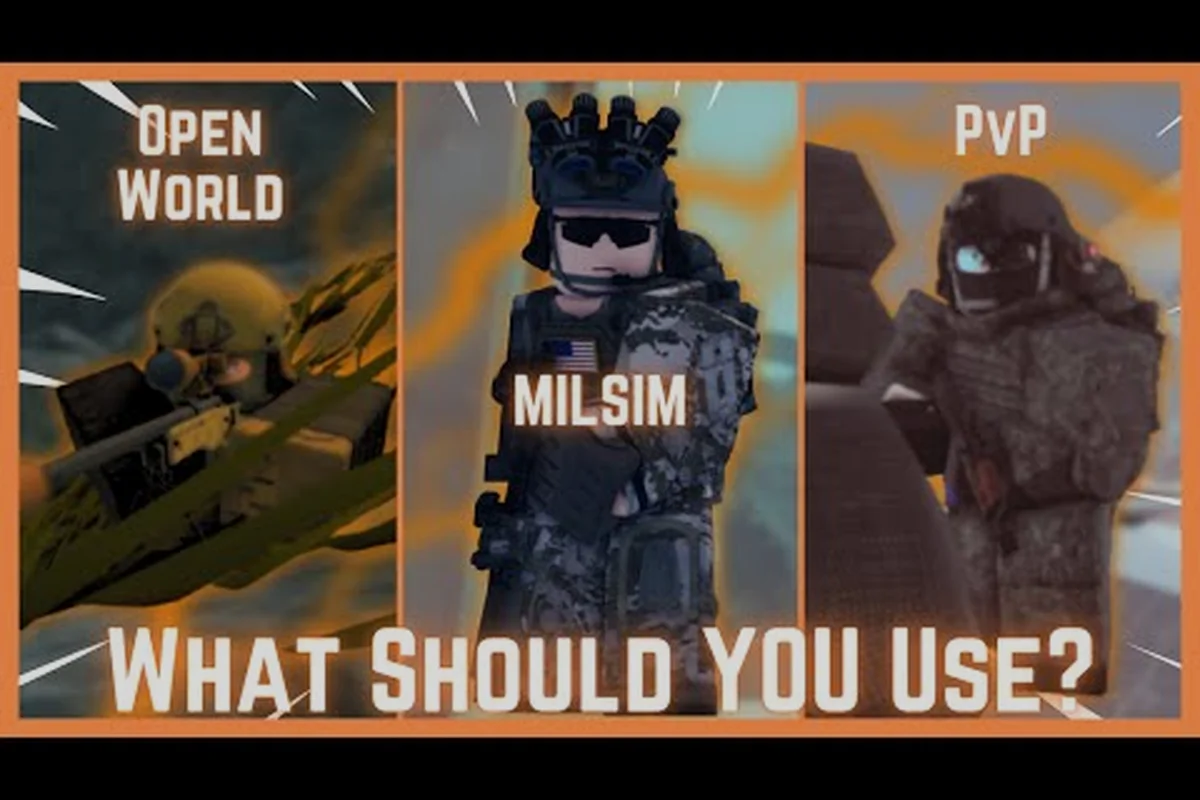
Picking the right camo in Blackhawk Rescue Mission 5 changes more than your loadout screen — it changes how long an AI scout keeps walking toward you before raising the alarm. This guide breaks down brm5 multicam against the three other core pattern families (brm5 woodland, brm5 desert uniform, brm5 urban uniform) and shows which brm5 headgear and brm5 facepaint pairings actually finish the operator skin on every Ronograd and Sawang map. The breakdown below comes from a community video walkthrough (BRM5 Uniforms and Appearance Video) cross-referenced with the broader brm5 uniforms tier list to keep the pattern picks grounded in player-tested data rather than guesswork.
For the authoritative reference, the official Roblox page keeps the complete details: the official PLATINUM FIVE Roblox group for brm5-multicam.
How Camo Scoring Works in BRM5
Before comparing individual patterns, it helps to know the four variables BRM5 actually uses to grade a uniform against the environment. Camo isn't a single "blend" slider — the engine evaluates micro-pattern density, color distance from the dominant ground tone, silhouette breakup at the operator's head and shoulder lines, and a hidden light-response value that swaps which color channels matter when the in-game clock crosses into the night window (roughly 18:00 to 22:00 in Ronograd time).
The Four Scoring Variables
-
Micro-pattern density: how many small color blocks per square meter the texture uses. Higher density wins in mid-range brush and mixed urban.
-
Color distance from ground tone: the delta-E color difference between the uniform and the surrounding ground texture. Smaller is better; anything above ~14 starts to glow.
-
Silhouette breakup: how aggressively the pattern breaks up the head-and-shoulder outline. This is where brm5 headgear choices start to matter as much as the shirt.
-
Light-response shift: how the pattern rebalances when ambient light drops. Multicam's brown-to-green ratio, for instance, slides toward green under low light.
Why a Pure Tier List Misleads
A flat tier list ranks uniforms in a vacuum. What actually matters is pattern × map × time of day. The same brm5 multicam that feels invisible in Sawang's jungle edge can read as a dark block in the snowy outskirts of Ronograd's northern district. Community testing on the BRM5 appearance test server suggests pattern-to-ground delta-E is the single strongest predictor of how long AI takes to spot you at 80m+ — and that is exactly the variable the engine reweights most aggressively at night.
The Core Pattern Families Side by Side
The four pattern families — brm5 multicam, brm5 woodland, brm5 desert uniform, and brm5 urban uniform — each solve a different terrain problem. The table below summarizes the color profile, the ground tone it best matches, and the map families where it pulls the highest blend score based on community data.
| Pattern Family | Dominant Colors | Best Ground Tone | Top Map Match | Night Performance |
|---|---|---|---|---|
| brm5 multicam | Tan, brown, olive, soft khaki | Mixed transitional (dirt + grass + urban edge) | Ronograd Open World, Sawang contract zones | Strong — tan channels dim, green channels rise |
| brm5 woodland | Deep green, brown, black | Heavy forest floor and dense brush | Sawang jungle interior, forest raid compounds | Mid — dark channels can flatten to a silhouette under moonlight |
| brm5 desert uniform | Sand, light tan, pale grey | Open arid ground and dry scrub | Ronograd dry sectors, Sawang coastal dunes | Strong — light channels hold contrast against night sky |
| brm5 urban uniform | Charcoal, mid-grey, faded blue | Concrete, asphalt, rebar | Ronograd City CQB, Mount Radar Station, bunker interiors | Weak to mid — grey channels wash out under streetlights |
When Multicam Wins
brm5 multicam is the highest-floor pattern in the roster because it was designed for transitional ground — places where the terrain shifts between two or more dominant tones. On Ronograd Open World, where a single compound can sit on dirt, patchy grass, and crumbling asphalt within a 30m radius, multicam's tan-and-olive split keeps delta-E under 10 across most of those transitions. The pattern is also forgiving of light changes because the brown channels drop in saturation while the green channels gain it as ambient light falls.
When Each Other Pattern Wins
-
brm5 woodland is the better pick inside Sawang's dense jungle interior, where the green channel of multicam starts to flatten against shadowed canopy. Woodland's deep-black micro-blocks create the silhouette breakup multicam cannot.
-
brm5 desert uniform outperforms multicam in the dry sectors of Ronograd and the coastal dunes around Sawang's port, where the ground delta-E for multicam's tan channels rises above the safe threshold.
-
brm5 urban uniform is the only pattern that meaningfully competes in CQB compounds — the Mount Radar Station interior, the bunker corridors, and the Ronograd City blocks. Grey concrete penalizes multicam's olive and brown, while urban grey sits at delta-E 4–6 on bare walls.
Brm5 Multicam Deep Dive: Variants and Best Use
The multicam family in BRM5 isn't a single texture. There are at least four brm5 multicam variants in the current uniform pool, and each one trades off a different scoring variable. Picking the right variant for your operator skin matters as much as picking multicam over woodland in the first place.
The Four Multicam Variants
| Variant | Color Bias | Best Use | Standout Feature |
|---|---|---|---|
| Standard Multicam | Balanced tan/olive | All-rounder | Lowest delta-E variance across maps |
| Multicam Tropic | Green-heavy | Sawang jungle edge | Better canopy blend, weaker in arid |
| Multicam Arid | Tan-heavy | Ronograd dry sectors | Holds contrast against night sky |
| Multicam Black | Charcoal + olive | Night raids, urban CQB | Strong silhouette breakup at the shoulder |
Multicam vs Woodland in Sawang
The Sawang jungle interior is the one place multicam's versatility becomes a weakness. brm5 woodland carries deeper black micro-blocks that break the operator's head and shoulder line against shadowed canopy, while multicam's lighter tan channels can glow when sun shafts hit the leaves. Community testing on the Sawang contract runs suggests AI detection at 60m is roughly 1.4 seconds faster against multicam than against woodland when the operator is standing still in canopy shadow.
That said, brm5 multicam still wins on the jungle edge, where the terrain shifts from green to brown dirt. For mixed-environment contracts, the standard multicam variant remains the safer pick.
Multicam vs Desert in Ronograd
In Ronograd's dry sectors, brm5 desert uniform outperforms multicam by a meaningful margin during the day because the ground delta-E for multicam's olive channels climbs above 12. At night, however, the desert uniform's pale-tan channels hold contrast against a darker sky, which can read as a glow against the horizon. Multicam's brown channels dim under low light and pull the operator's silhouette into the ground tone, making it the more reliable night pick even in arid zones.
Headgear and Facepaint Pairings That Finish the Loadout
A brm5 operator skin is only as good as the headgear and facepaint layered over it. The wrong helmet can erase every delta-E point the body camo earned, especially in CQB where most spotting happens at chest-and-head height. The pairing tables below are organized by terrain family, with the recommended brm5 headgear tier and a single brm5 facepaint suggestion per row.
Ronograd Open World Pairings
| Terrain Slot | Headgear Pick | Facepaint Pick | Why It Works |
|---|---|---|---|
| Mixed dirt + grass | Ballistic cap, multicam cover | Dark olive stripe | Cap keeps head silhouette low; olive stripe matches multicam channels |
| Asphalt edge | Bump helmet, multicam cover | Charcoal smudge | Helmet breaks the shoulder line against hard surfaces |
| Night raid | Ballistic cap, multicam black | Blackened cheek stripe | Multicam black's low-light response pairs with blackened facepaint |
Sawang Pairings
| Terrain Slot | Headgear Pick | Facepaint Pick | Why It Works |
|---|---|---|---|
| Jungle interior | Boonie hat, woodland cover | Green-and-black camo stroke | Boonie hat creates irregular outline against canopy |
| Jungle edge | Ballistic cap, multicam tropic | Olive-tan gradient | Tropic cap matches the ground shift; gradient facepaint softens cheek highlight |
| Coastal dunes | Bump helmet, desert cover | Sand-tone matte | Helmet silhouette breakup against dune ridges; matte facepaint kills shine |
Urban CQB Pairings
| Terrain Slot | Headgear Pick | Facepaint Pick | Why It Works |
|---|---|---|---|
| Bunker interior | Bump helmet, urban grey | Charcoal full mask | Full mask removes the exposed face highlight under fluorescents |
| City block | Ballistic cap, urban grey | Mid-grey smudge | Cap keeps the head low; grey smudge blends to wall tone |
| Mount Radar interior | Mesh mask + bump helmet | None needed | Mesh mask breaks up the human-face pattern AI scouts key on |
The pattern across all three tables is consistent: brm5 headgear should match the body camo's color family, and brm5 facepaint should be one shade darker than the dominant ground tone to absorb the highlight that bare skin produces under direct light. Players who skip facepaint on bright-sun contracts routinely report AI spotting 0.8–1.2 seconds faster than players who apply a matching matte layer, according to community data from the BRM5 uniforms tier list guides.
Building a Full Brm5 Operator Skin on a Budget
A full brm5 operator skin doesn't require every variant in the roster. The most efficient build follows a two-pattern core — one transitional pick (almost always brm5 multicam) and one terrain-specific pick — and rotates headgear and facepaint to match. This keeps the cosmetic budget reasonable while covering roughly 80% of the contract and open-world rotations a typical operator runs.
The Two-Pattern Core Build
| Slot | Pick | Role |
|---|---|---|
| Primary pattern | brm5 multicam (standard variant) | Transitional and Ronograd default |
| Secondary pattern | brm5 woodland OR brm5 desert uniform | Terrain-specific fallback |
| Headgear rotation | Ballistic cap multicam + boonie woodland | Cover most map families |
| Facepaint rotation | Olive stripe + green-black stroke | One for mixed, one for jungle |
| Backup | brm5 urban uniform + bump helmet | CQB-only runs |
Budget Order for New Operators
-
Unlock standard brm5 multicam first — it is the highest-floor pattern and covers the most map families.
-
Pick one secondary pattern based on the map you run most: woodland for Sawang, desert for Ronograd's dry sectors, urban for CQB compounds.
-
Add one matching brm5 headgear in the same color family as the secondary pattern.
-
Add one brm5 facepaint that matches the dominant ground tone of the map you play most.
-
Hold off on variant camos (Multicam Tropic, Multicam Arid) until the core two-pattern set is fully kitted.
Players who follow this order report that their AI detection distance drops noticeably within the first week, because most of the spotting happens on transitional ground where multicam's versatility was already doing the heavy lifting.
When to Spend on a Third Pattern
A third pattern is worth the credits only if the operator runs a specific role consistently. Sniper teams that live in Sawang's jungle interior should add brm5 woodland as the secondary, since multicam's tan channels can read as a glow in heavy canopy. CQB-focused squads running the Mount Pandora finale should add brm5 urban uniform instead, since most of the finale takes place in bunker and radar-station interiors where multicam's olive channels wash out against concrete.
For most operators, however, the two-pattern core plus headgear and facepaint rotation covers the full roster of contracts without the credit cost of chasing every variant. The complete brm5 outfits guide walks through how to mix these pieces with faction-specific pieces (Russian, US, UK, special forces) for players who want to push past the budget build into full cosmetic layering.
Frequently Asked Questions
Is brm5 multicam the best all-around camo in BRM5?
Yes — the standard brm5 multicam variant has the lowest delta-E variance across the full map pool, which makes it the highest-floor pattern in the roster. It loses to brm5 woodland in dense jungle and to brm5 desert uniform in arid sectors, but it never falls below mid-tier on any default map. For most operators running a mix of Ronograd and Sawang contracts, multicam is the right primary pick.
Should I pick multicam or woodland for Sawang jungle runs?
Pick woodland if more than half the run takes place in dense canopy interior, because brm5 woodland's deep-black micro-blocks break the head-and-shoulder silhouette better than multicam's lighter tan channels. Pick brm5 multicam if the run crosses jungle edge, river banks, and open dirt, because multicam handles those transitions while woodland starts to glow against dry ground.
Does brm5 facepaint actually affect AI detection?
Yes — community testing on the BRM5 appearance server suggests facepaint reduces AI spotting speed by roughly 0.8–1.2 seconds in bright-sun contracts because bare skin produces a highlight under direct light. The best brm5 facepaint is one shade darker than the dominant ground tone, applied as a matte layer over the cheeks and nose bridge.
What brm5 headgear pairs best with multicam in CQB?
A bump helmet in multicam cover is the best brm5 headgear pick for CQB, because the helmet breaks the shoulder silhouette against hard concrete and the multicam cover keeps the color family consistent with the body camo. Pair it with a charcoal full-mask facepaint for bunker interiors where fluorescent lighting creates a hard highlight on exposed skin.
Can I build a full brm5 operator skin without buying every variant?
Yes — a two-pattern core (standard brm5 multicam plus one terrain-specific pattern), two headgear pieces, and two facepaint options covers roughly 80% of the map pool. Variant camos like Multicam Tropic or Multicam Arid are worth buying only after the core set is fully kitted and the operator has a clear specialty role to optimize for.